
The staffing difference comes first
A consulate general is staffed by career diplomats sent from the home country, in a government office, working government hours. An honorary consulate is a local person, often a business figure or lawyer, appointed to represent the country part-time, frequently from their own office. By Diplo's count there are more than 20,000 honorary consuls worldwide, because the model is cheap reach: a flag in a city that could never justify a career post. Neither is fake. They are different instruments, and the difference shows up exactly where travelers feel it.
The money difference explains the rest
A consulate general is funded as a state office: salaries, premises, secure document stock. An honorary consul typically receives expenses or a small honorarium and subsidizes the role personally, which is why honorary offices keep shorter hours, sit inside other businesses, and run out of things a state office stocks, like passport blanks. When an honorary office says it cannot take your application, it is usually describing its funding, not its attitude.
The signature difference, counted
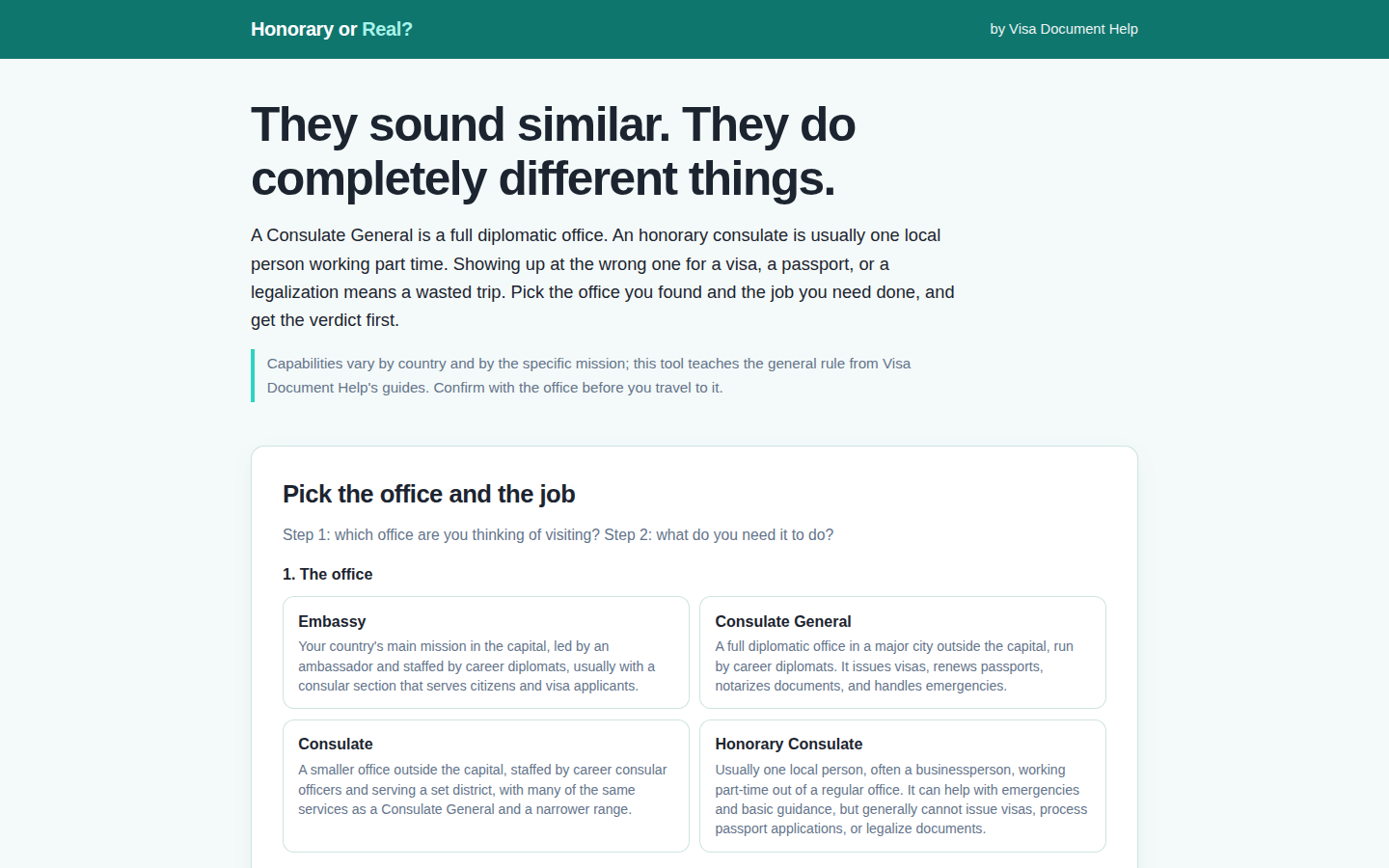
Our office-and-service matrix scores 32 combinations of office type and task: 18 come back can, 8 with limits, and 6 cannot. Every one of the six cannots belongs to the honorary column. Career offices can issue and renew the documents they are accredited for; honorary offices mostly witness, certify, advise and forward, with the binding decisions made at the supervising consulate general or embassy. The Honorary or Real checker runs your specific pair and prints the verdict with its reason.
Which one should you visit?
For information, witnessing and local help, the honorary office near you may be exactly right and much closer. For a passport, a visa decision or a legalization that binds, plan on the career office that supervises it. The five-checks guide on this blog shows how to confirm which kind of office you have found before you travel to it.